Southern Morocco reveals a remarkable variety of landscapes, cultures, and historic towns, and this 8 Day Morocco Desert & Atlantic Coast Tour from Marrakech connects many of the region’s most fascinating places in a single journey. From the peaks of the High Atlas Mountains to the vast dunes of the Sahara and the breezy towns of the Atlantic coast, each day brings new scenery and experiences.
From there, the road follows the legendary Draa Valley, lined with palm groves and fortified villages that have stood along old caravan routes for centuries.
Farther south, the village of M’Hamid marks the final settlement before the open Sahara. Spending a night in a desert camp surrounded by towering dunes and a sky filled with stars is an unforgettable highlight of the journey.
After the desert adventure, the route continues west through remote villages, traditional craft towns, and fertile valleys known for saffron and Berber carpets. The scenery then shifts once again as the Atlantic Ocean appears, bringing cool breezes, national parks rich in wildlife, fishing villages, and historic coastal cities.
7 Days 8 Nights.
Marrakech.
Marrakech.
This trip reveals several remarkable destinations across southern Morocco, each offering its own character and scenery. The adventure begins in M’Hamid, a small desert village that marks the final gateway before the vast Sahara landscape unfolds. From here, the route leads deep into the dunes of Erg Chigaga, one of the largest and most remote sand deserts in the region, where endless golden dunes stretch toward the horizon.
The journey then continues toward Taliouine, a peaceful town well known for producing Morocco’s finest saffron, before reaching Taroudant, a historic walled city often compared to Marrakech for its lively souks and traditional atmosphere.
Nature lovers will also enjoy time in Souss Massa National Park, an area rich in wildlife and coastal landscapes, before the trip reaches Agadir, a modern seaside city famous for its long sandy beaches and relaxed coastal lifestyle.
– Your tour begins with a morning pickup from your hotel in Marrakech before heading toward the High Atlas Mountains. The road climbs gradually through winding valleys and traditional Berber villages until reaching Tizi n’Tichka Pass, the highest mountain pass in Morocco. From here, the views stretch across rugged peaks and remote settlements scattered along the slopes.
Descending the southern side of the mountains reveals a dramatic change in scenery as the landscape becomes drier and more desert-like. The next stop is the historic Ait Ben Haddou, a fortified ksar built from clay and straw that has stood along ancient caravan routes for centuries. Recognized as a UNESCO World Heritage Site, this village has also served as a filming location for numerous international movies.
You will have time to walk through its narrow passages and climb to the hilltop for a panoramic view of the kasbah and surrounding valley. Lunch is usually enjoyed on a terrace overlooking the village.
In the afternoon, the road continues toward Ouarzazate, often referred to as the film capital of Morocco. Known for its studios and historic architecture, the city has appeared in many famous productions. After visiting the Taourirt Kasbah, the day ends with dinner and an overnight stay in Ouarzazate.
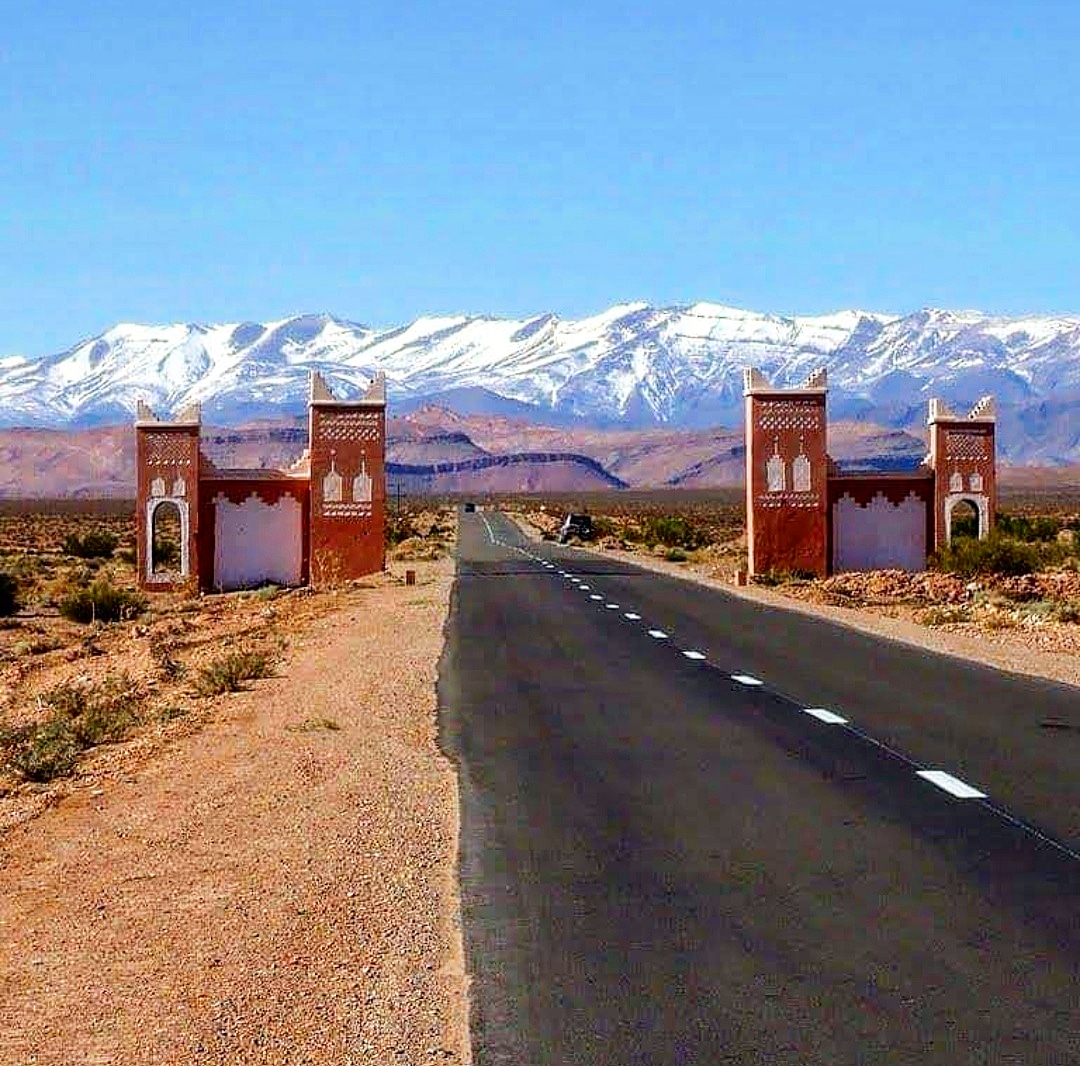
– The journey continues south along one of Morocco’s most scenic routes, the Draa Valley. This valley stretches for hundreds of kilometers and is known for its dense palm groves, traditional kasbahs, and small villages surrounded by desert landscapes.
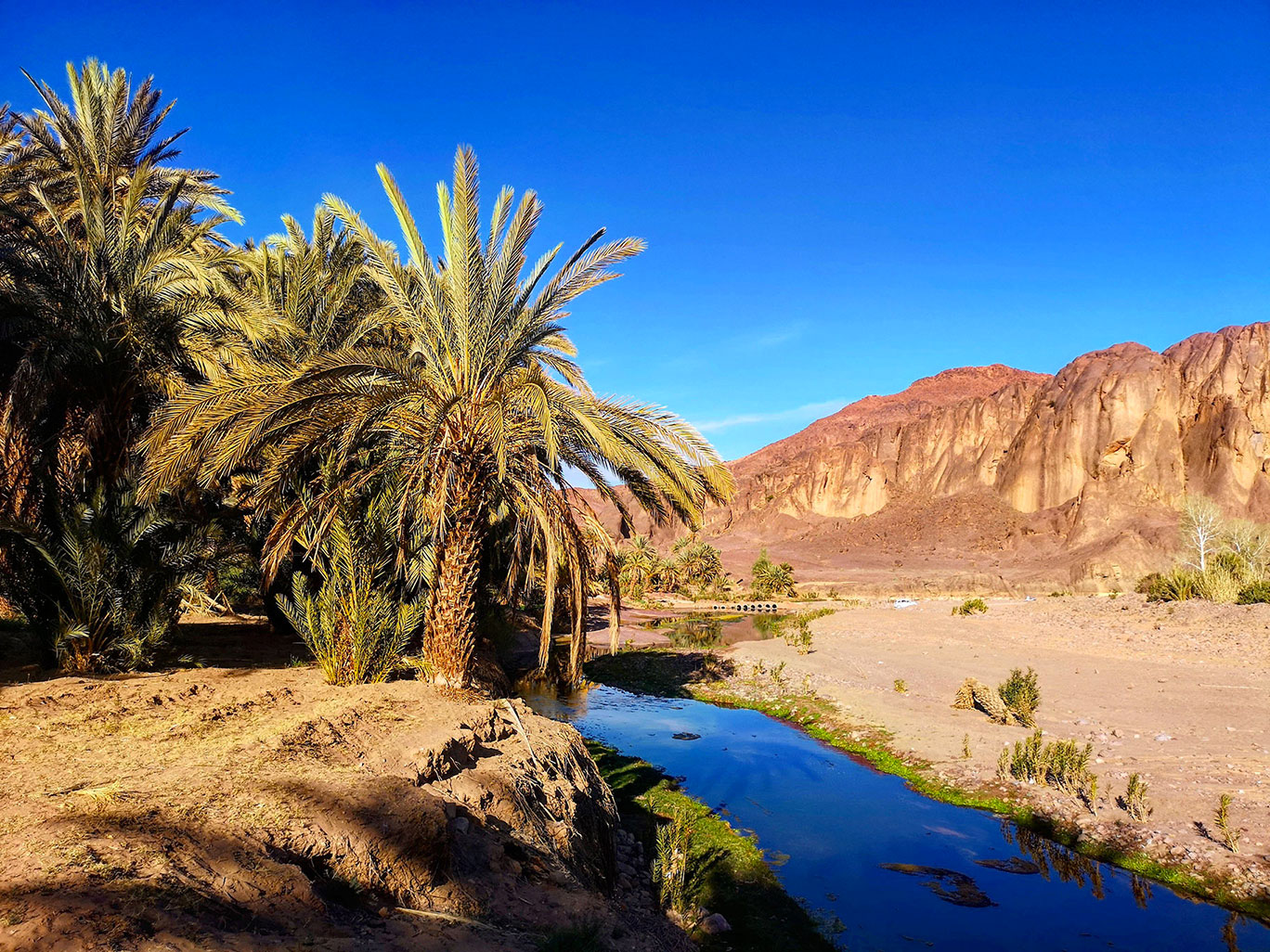
As the road follows the river valley, countless palm trees appear along the horizon, forming one of the largest oasis systems in the country. Along the way, a stop in Tissergate offers the chance to stretch your legs with a short walk through the palms and enjoy mint tea with locals.
The journey then reaches Zagora, a historic desert town once connected to the old caravan trade routes heading toward Timbuktu. Visitors can explore the local market and observe daily life in this quiet Saharan settlement.
A short drive farther brings you to Tamegroute, known for its ancient library and distinctive green pottery. Here, traditional artisans continue to produce ceramics using techniques passed down through generations.
By late afternoon, the road arrives in M’Hamid, the final village before the vast Sahara begins. This small desert settlement serves as the gateway to the great dunes farther south. Dinner and overnight stay in M’Hamid.
– The landscape changes dramatically on the third day as the paved road ends and the journey continues by 4×4 vehicle into the desert.
Leaving M’Hamid behind, the route crosses the wide plains of Iriki National Park, an area known for its seasonal lakes, desert vegetation, and migrating birds. The scenery here feels remote and untouched, with long stretches of open land leading toward distant dunes.
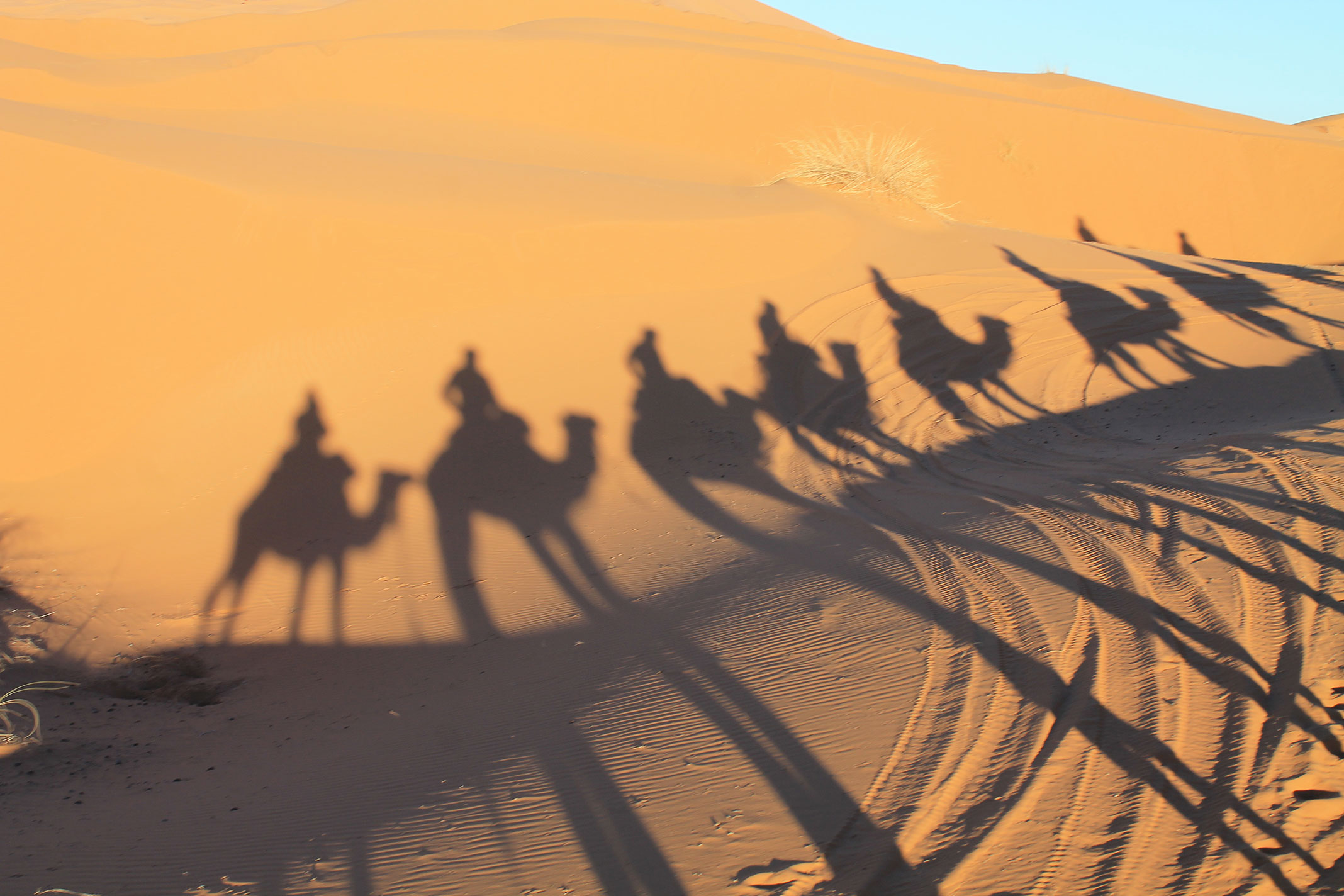
Occasionally, nomadic families can be seen moving across the desert with their animals, continuing traditions that have existed for generations. Gradually, the dunes of Erg Chigaga begin to appear on the horizon. Rising as high as 300 meters, these dunes form one of the largest and most impressive sand seas in Morocco.
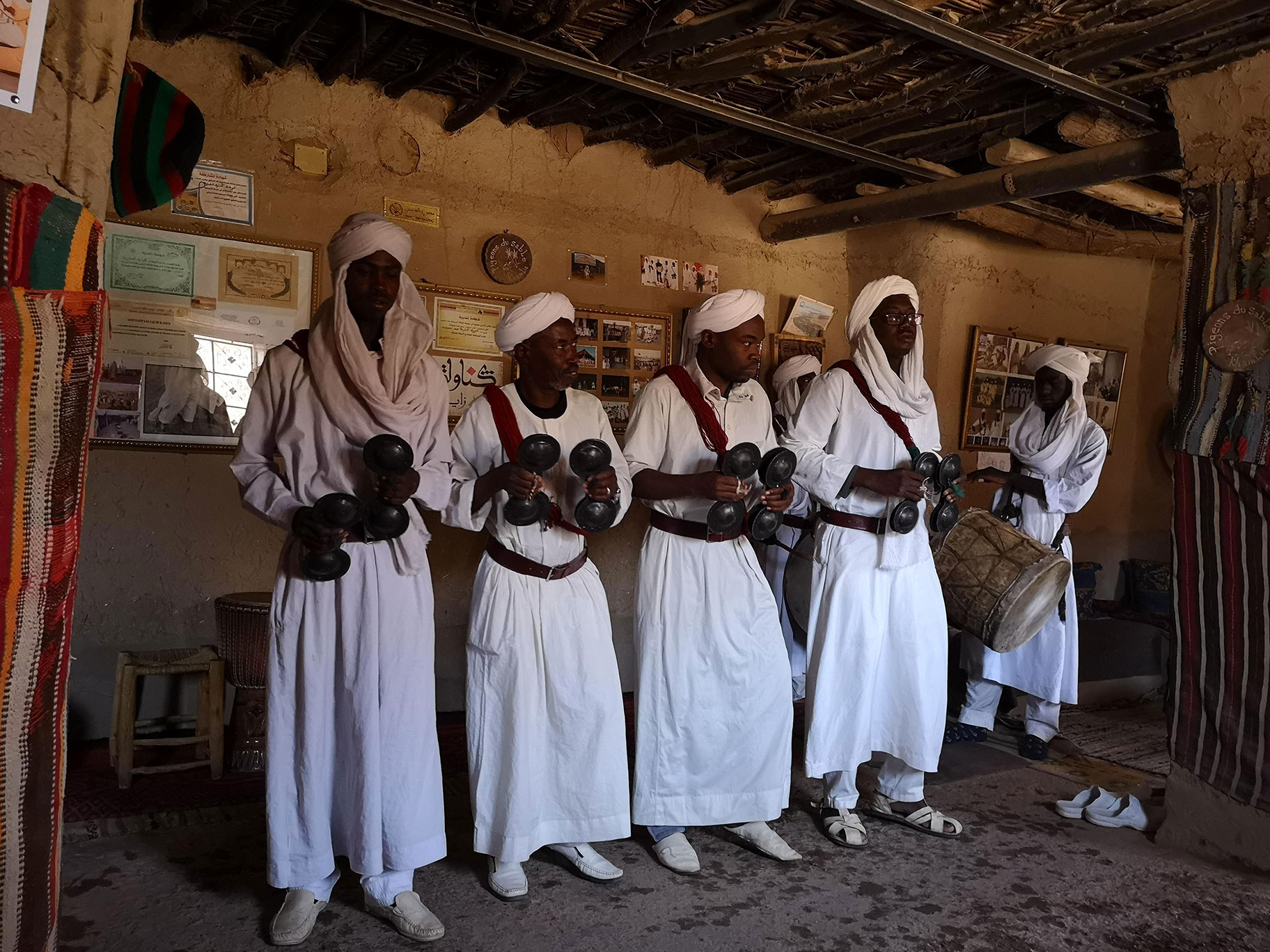
In the evening, you arrive at a desert camp set among the dunes. Dinner is served beneath the open sky, followed by traditional music around the fire. With no city lights nearby, the stars shine brilliantly above the Sahara.
– The journey continues west across rugged landscapes toward the village of Foum Zguid, marking the return to paved roads.
The route then leads to Taznakht, a town famous throughout Morocco for its handwoven Berber carpets. Here, travelers often visit local workshops where artisans create colorful rugs using traditional techniques.
Continuing through the mountains brings you to Taliouine, widely known as Morocco’s saffron capital. The region produces some of the country’s finest saffron, and visitors can learn about how this valuable spice is cultivated and harvested.
By late afternoon, the road arrives in Taroudant, a historic city surrounded by impressive defensive walls. Often compared to Marrakech because of its lively markets and traditional architecture, Taroudant offers a more relaxed atmosphere while still reflecting Morocco’s rich cultural heritage.
– The Trip continues toward the Atlantic coast, where the climate becomes cooler and the scenery greener.
The first stop of the day is Souss Massa National Park, a protected area known for its diverse wildlife and coastal landscapes. Walking trails pass through dunes, wetlands, and cliffs overlooking the ocean, making it an excellent place to observe birds and other native species.
Later in the day, the route reaches Agadir, a modern coastal city famous for its long beaches and seaside promenade.
From there, the road continues north to Taghazout, a relaxed fishing village that has become well known for surfing and ocean views. As evening approaches, you can watch the sun set over the Atlantic before settling in for the night.
– The sixth day follows the beautiful Atlantic coastline, passing cliffs, beaches, and small fishing villages.
One of the most charming stops is Imsouane, a quiet coastal village known for its calm atmosphere and scenic harbor. This is an excellent place to enjoy lunch featuring freshly caught seafood from the local fishermen.
After lunch, you may take a walk along the beach or watch surfers riding the long waves that have made this location famous. In the afternoon, the road continues toward Essaouira, a historic port city known for its sea walls, fishing harbor, and artistic atmosphere.
– Today is dedicated to exploring Essaouira, formerly known as Mogador. This charming coastal city is famous for its fortified medina, which is listed as a UNESCO World Heritage Site.
A guided walk through the old town introduces its narrow streets, traditional markets, and white buildings with blue doors and windows. The lively fishing port is another highlight, where fishermen bring in their daily catch and seagulls circle above the harbor.
In the afternoon, you will have free time to wander through the medina, browse artisan shops, or relax at one of the seaside cafés overlooking the ocean.
– The final day begins with a scenic drive back toward Marrakech. Along the route, the road passes through large areas of argan trees, which grow almost exclusively in this part of Morocco.
There will be an opportunity to visit a local argan oil cooperative, where women demonstrate the traditional process used to produce this famous oil, widely valued for both culinary and cosmetic uses.
After the visit, the journey continues through rolling countryside until the red walls of Marrakech appear once again.