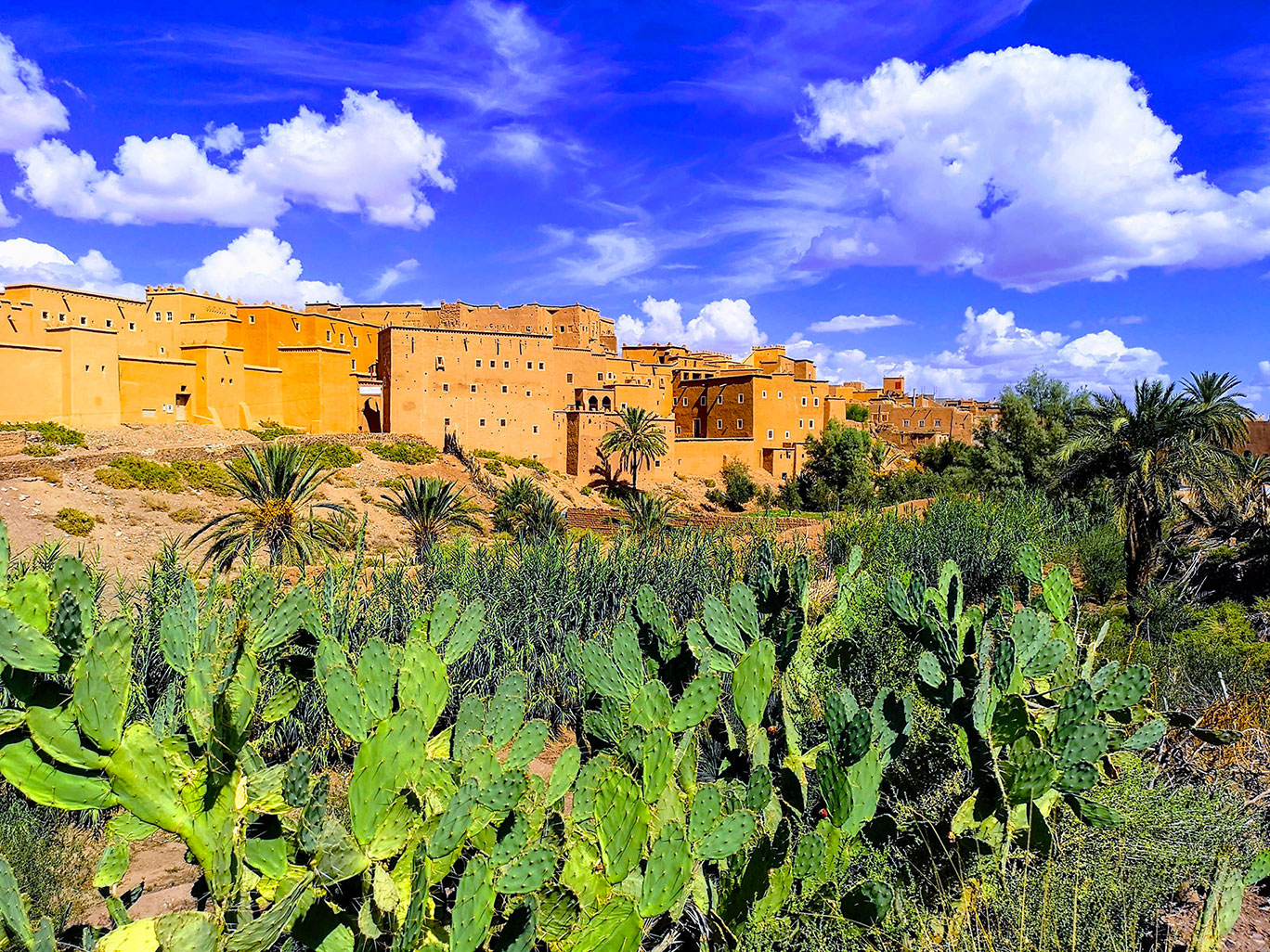
Morocco’s southern landscapes reveal an extraordinary variety of deserts, each with its own atmosphere and scenery. This Morocco 7 Deserts Tour from Marrakech leads travelers deep into the country’s most striking desert regions, from the palm-lined valleys of the south to the towering dunes of the Sahara.
The route begins by crossing the dramatic High Atlas Mountains before reaching the historic kasbahs and desert towns of southern Morocco. Along the way, you’ll visit the legendary Ait Ben Haddou, explore traditional valleys carved by ancient rivers, and continue toward the edge of the Sahara where the great dunes begin to rise.
During the trip, three remarkable desert environments unfold one after another. Later, remote desert tracks lead toward the vast and less-visited dunes of Erg Chigaga, where the landscape feels wild and untouched. In between, the journey follows old caravan routes and historic oasis towns such as Zagora and Mhamid.
6 Nights 7 Days.
Marrakech.
Marrakech.
This tour introduces travelers to three of Morocco’s most remarkable desert landscapes, each offering a different atmosphere and scenery. From the quiet dunes near Zagora to the vast sands of Erg Chebbi and the remote wilderness of Erg Chigaga, the route reveals the many faces of the Sahara.
Along the way, the experience combines dramatic desert panoramas with authentic cultural encounters. Visitors will pass through traditional villages, ancient caravan routes, and palm-filled valleys while discovering the daily life and traditions of southern Morocco.
Expect a trip filled with changing landscapes, warm hospitality, and unforgettable desert moments. From camel rides across golden dunes to peaceful nights beneath a sky full of stars, each day offers a new perspective on Morocco’s desert regions.
By the end of the journey, these three deserts will leave lasting memories that go far beyond the days spent traveling.
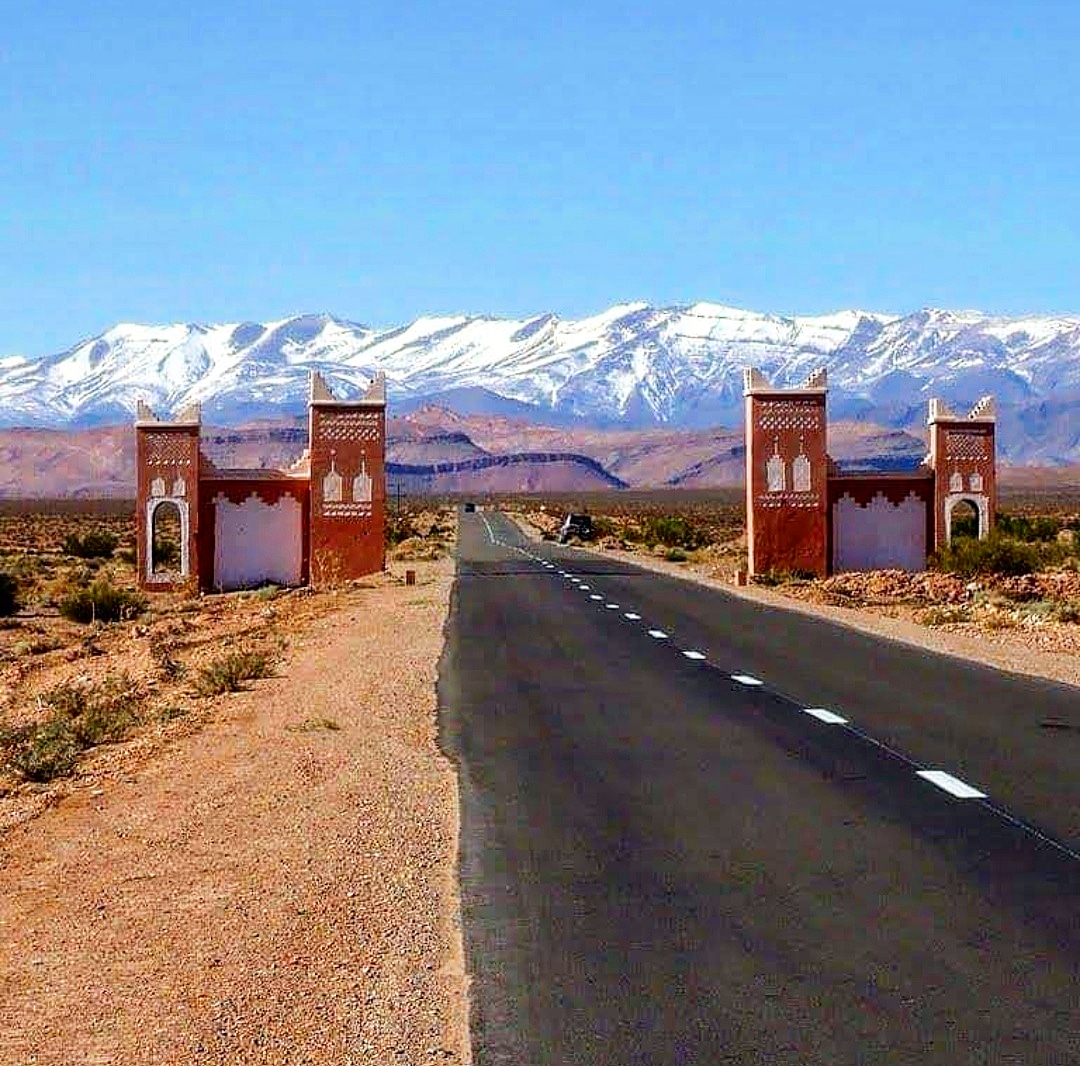
– The trip begins with a morning pickup from your accommodation in Marrakech before heading toward the High Atlas Mountains. The road climbs steadily through winding mountain routes until reaching Tizi n’Tichka Pass, the highest mountain pass in Morocco. From here, sweeping views reveal dramatic ridges, distant valleys, and small Berber villages built from earth-colored stone.
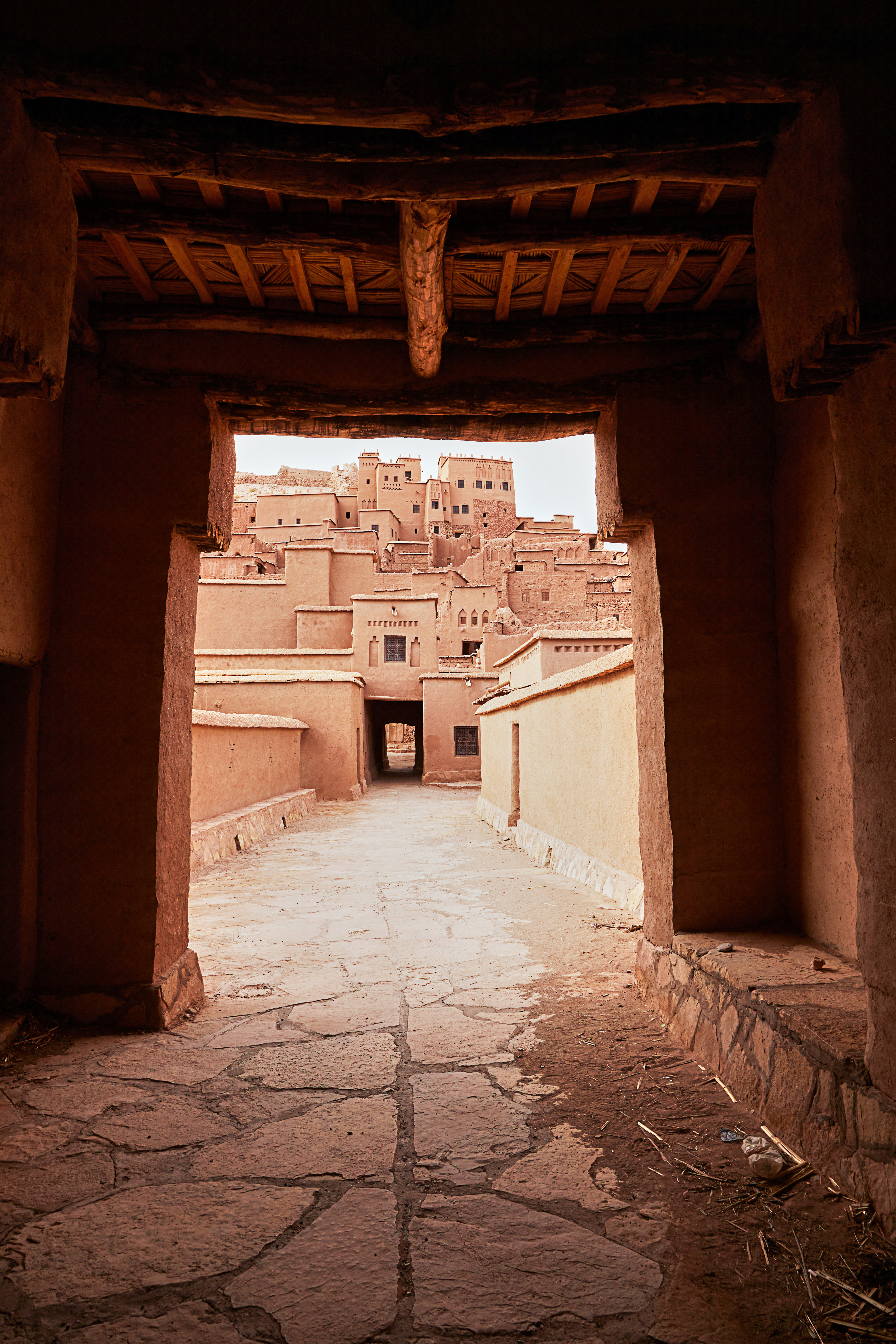
As the descent begins, the landscape gradually shifts from mountain scenery to dry plains and desert terrain. Soon the historic Kasbah Ait Ben Haddou appears on the horizon. This fortified village, recognized by UNESCO, has stood along an ancient trading route for centuries. Visitors can wander through its narrow pathways and climb to the top for panoramic views across the surrounding valley.
After lunch with a view of the kasbah, the road continues toward Ouarzazate, a desert city known for its role in international filmmaking. Large film studios and nearby kasbahs have attracted movie productions for decades.
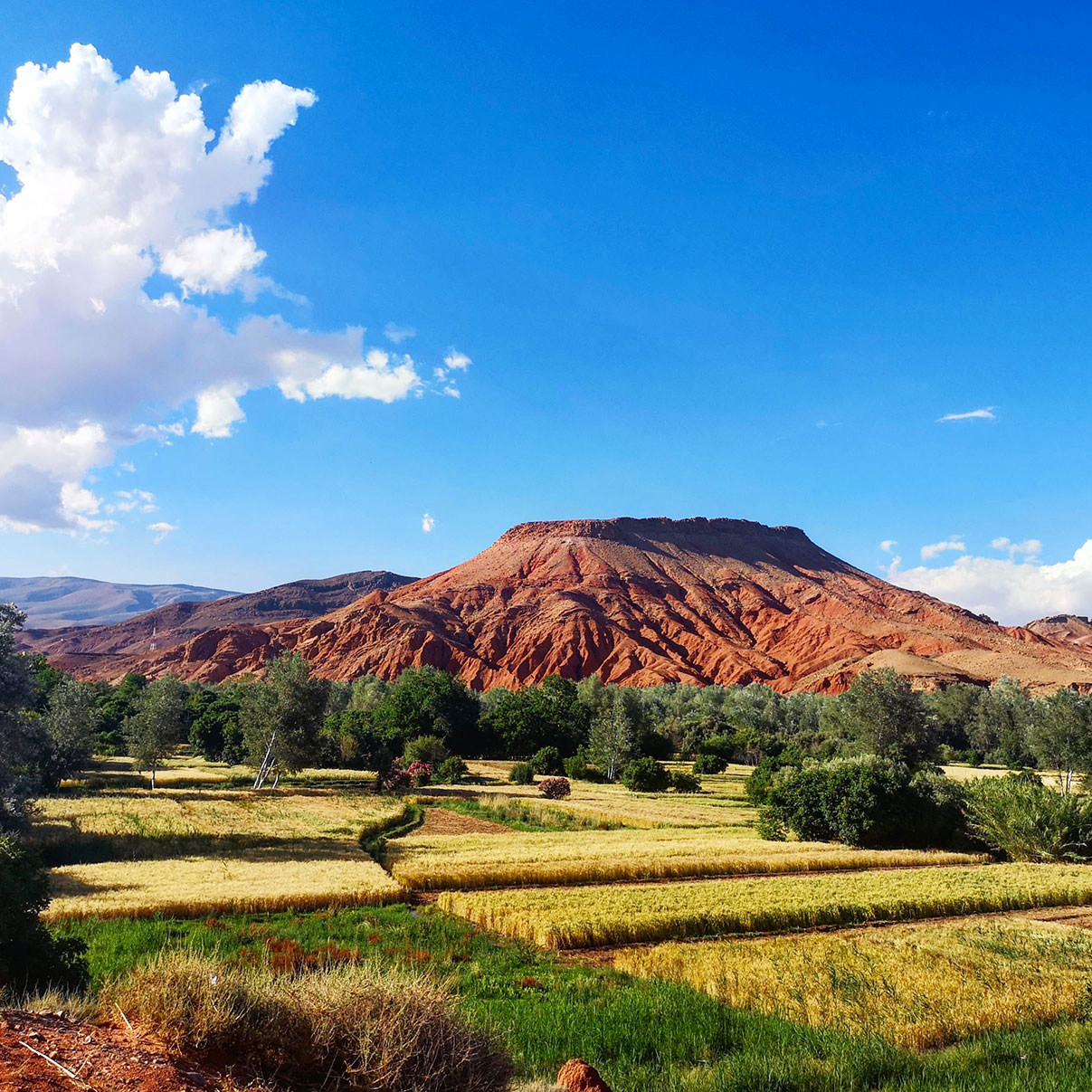
– Leaving Ouarzazate behind, the journey continues east toward the spectacular Dades Valley, an area famous for its unusual rock formations and dramatic landscapes shaped by wind and water.
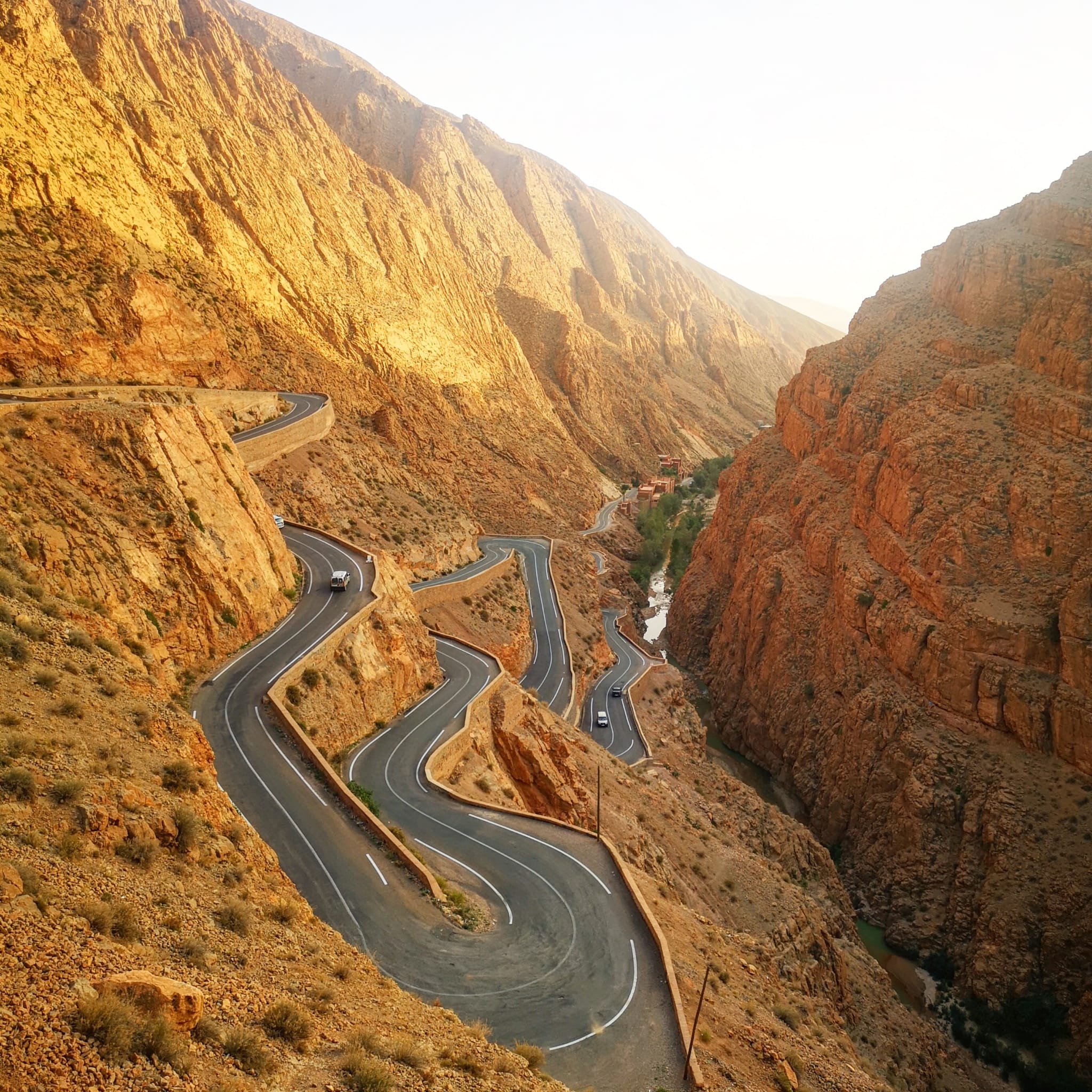
The road then leads to Todra Gorge, where towering canyon walls rise sharply on both sides of a narrow valley. Visitors often take time to walk along the river that runs through the gorge, enjoying the cool shade beneath the tall cliffs.
From here, the route continues toward the desert region. Palm groves and rocky hills gradually give way to wide open terrain. The historic town of Rissani, once an important caravan trading center, offers a glimpse of traditional desert life and lively markets.
By late afternoon the dunes of Erg Chebbi begin to appear near the village of Merzouga. The golden sands stretch across the horizon, marking the gateway to the Sahara.
– The morning begins with time to explore the famous dunes of Erg Chebbi, among the most recognizable desert landscapes in Morocco. The sand hills rise high above the surrounding plains and offer incredible views in every direction.
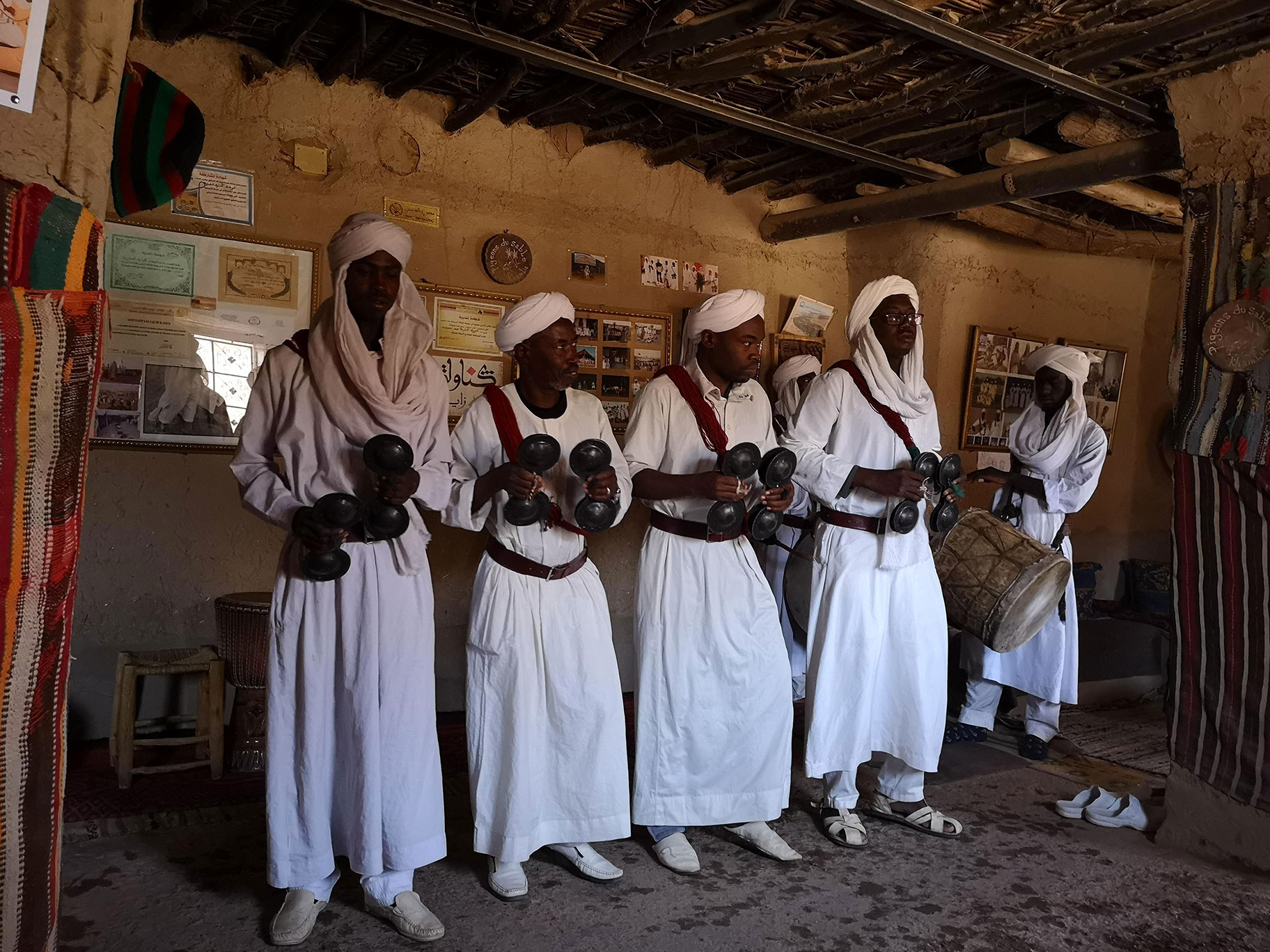
Later, the excursion continues to Khamlia, a small village known for its unique musical heritage. Local musicians perform traditional Gnawa music, using drums and metal castanets to create rhythmic sounds that reflect centuries-old traditions connected to sub-Saharan culture.
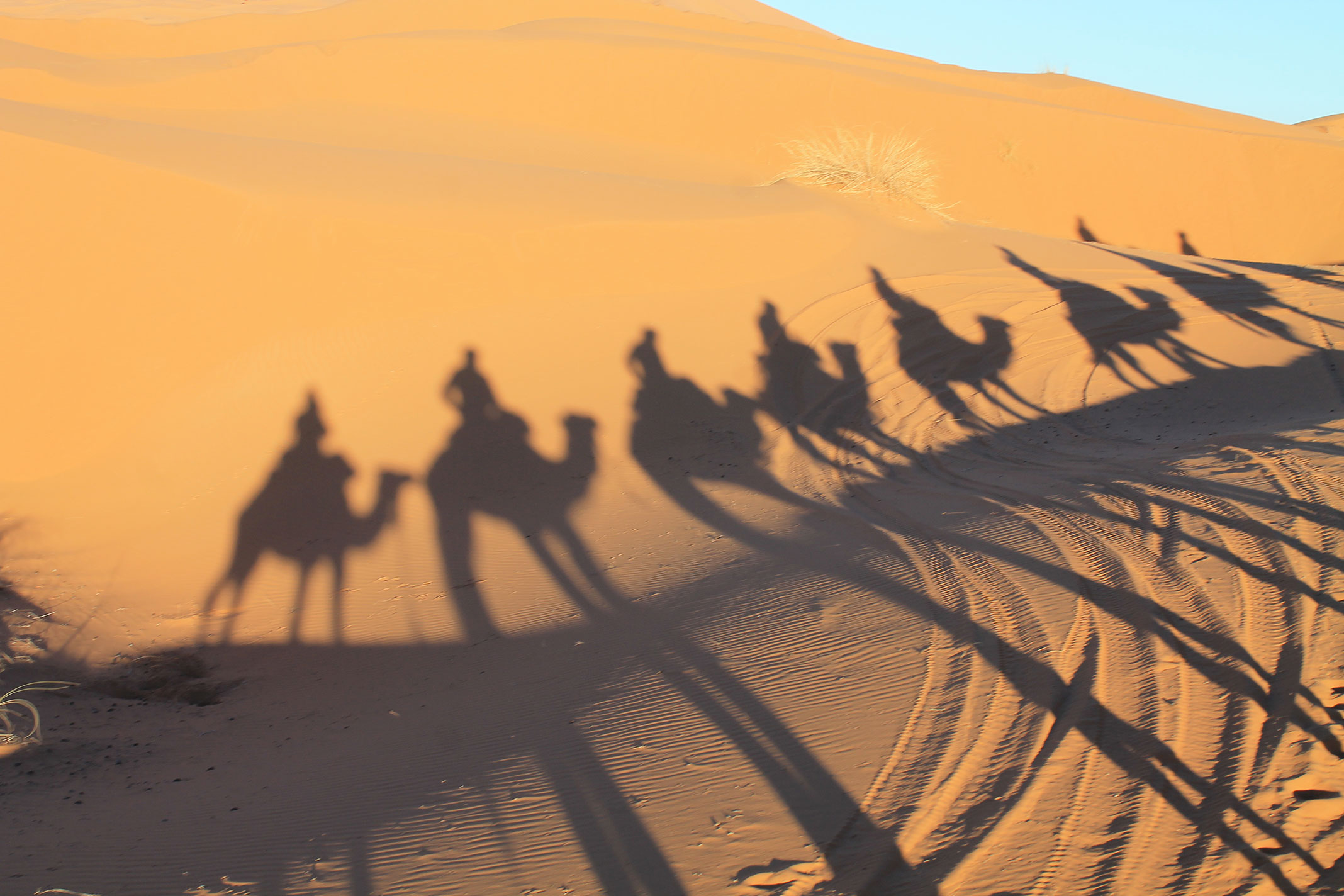
During the afternoon, the experience moves deeper into the desert. A camel ride across the dunes leads to a traditional camp set among the sands. As the sun lowers over the Sahara, the color of the dunes slowly changes, creating an unforgettable desert sunset.
Dinner is served at the camp, followed by traditional music around the fire before spending the night under a clear desert sky.
– Today’s route leaves the main roads behind and follows remote desert tracks once used during the famous Paris-Dakar rally. Traveling by 4×4 vehicle, the journey heads toward the quiet village of Ramlia, located deep in the desert region.
The route continues toward Tafraoute Sidi Ali, passing across dark volcanic landscapes often referred to as the “black desert.” The terrain feels remote and untouched as the road winds through open plains and rocky hills.
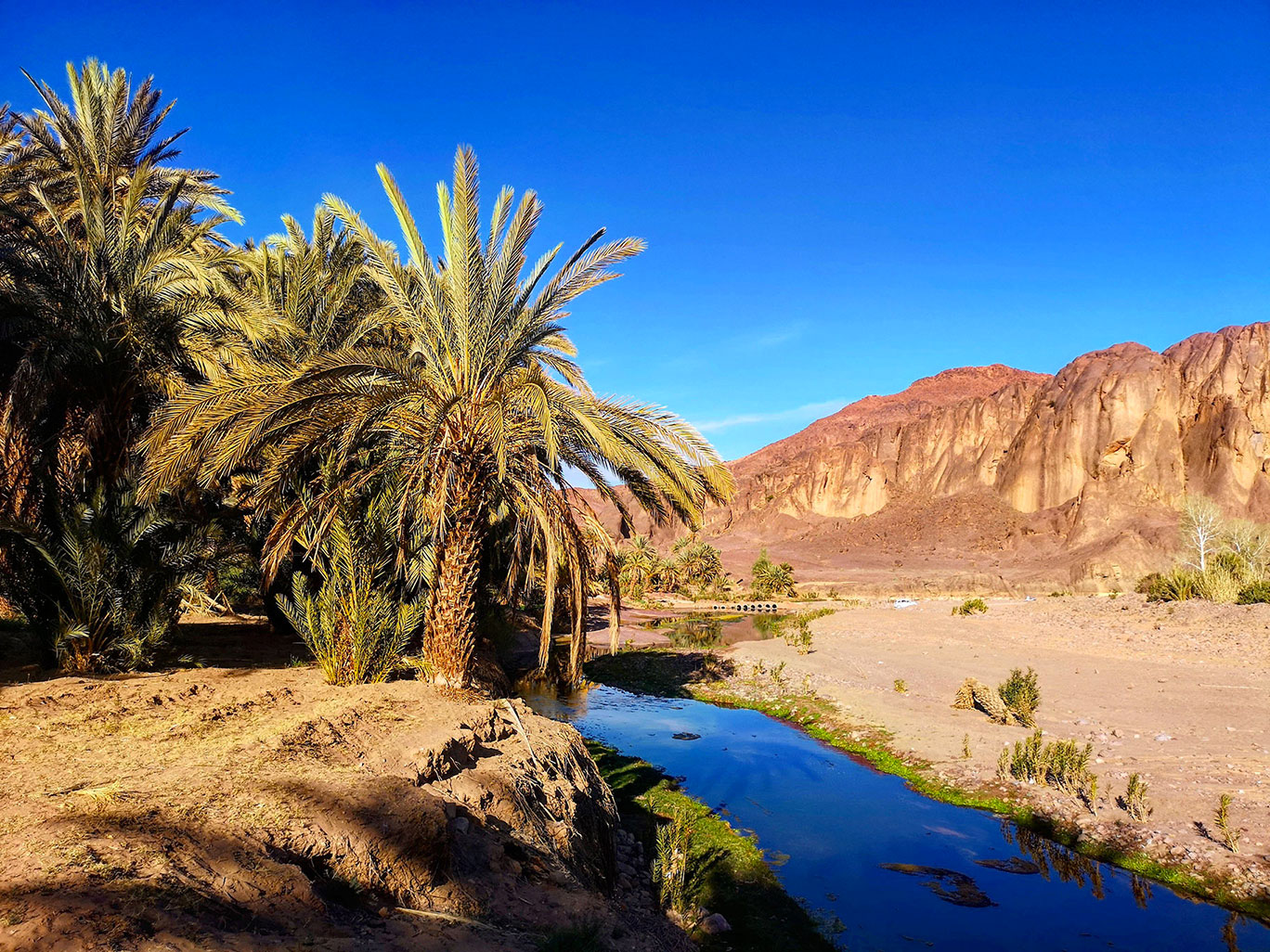
Later in the day, the path leads through Tissemoumine before reaching Zagora, an oasis town that historically served as a stop for caravans traveling across the Sahara.
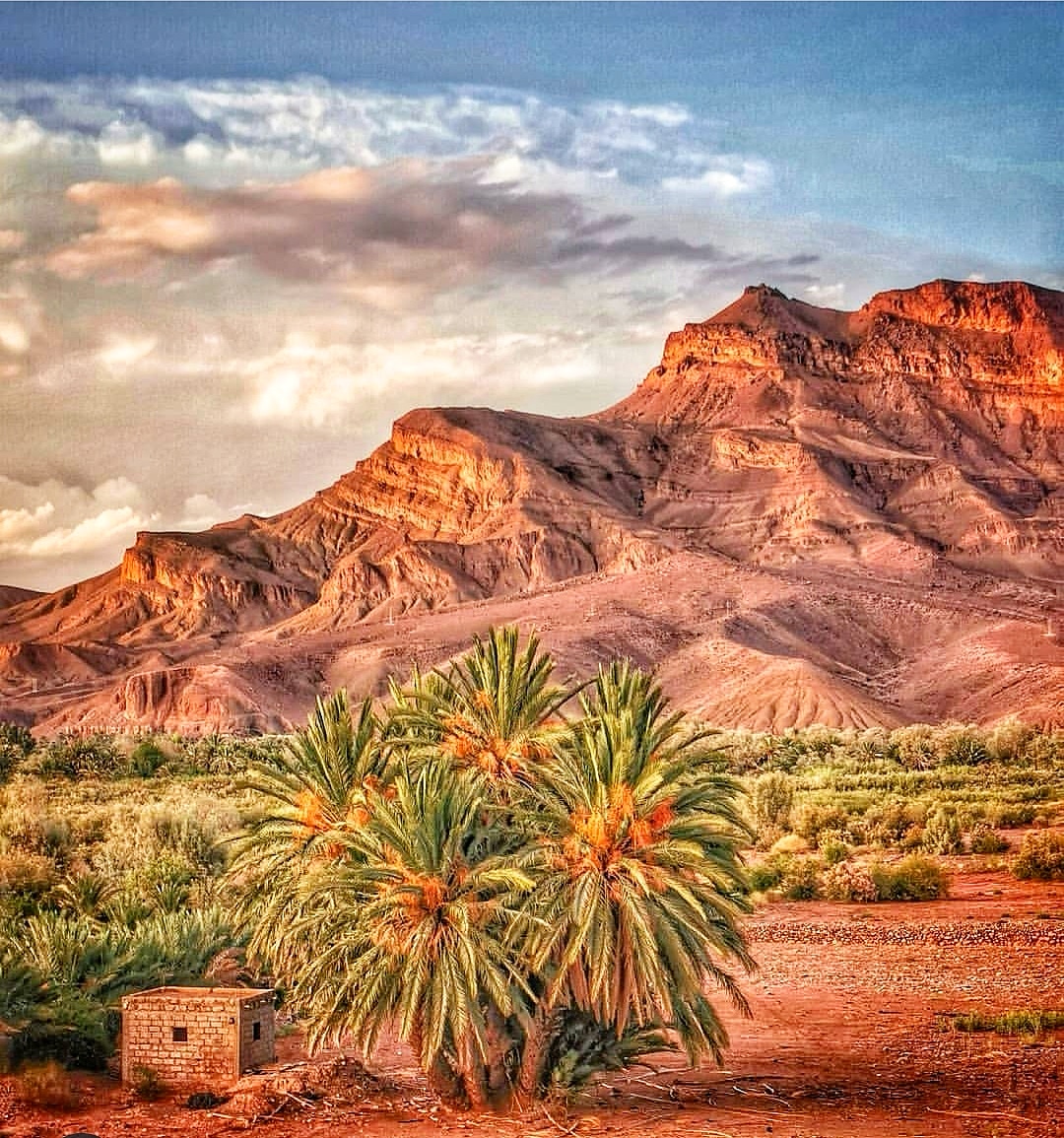
– The journey follows the famous Draa Valley, one of Morocco’s longest river valleys lined with thousands of palm trees and traditional kasbahs. A short drive brings you to Tamegroute, a village known for its ancient religious library and traditional green pottery. The route then continues to Mhamid, often considered the last village before the vast Sahara begins.
Crossing the wide plains of Iriki National Park, the scenery changes again. Seasonal lakes, desert plants, and open horizons create a striking landscape where migratory birds are sometimes visible.
Finally, the towering dunes of Erg Chigaga rise from the desert floor. Some of the highest dunes in Morocco can be found here, reaching impressive heights and stretching far into the distance.
– Morning in the Sahara offers quiet desert views before beginning the return journey. After breakfast, the route heads north toward Taznakht, a village well known for its traditional Berber carpet weaving.
Visitors often stop here to see local artisans working on handmade rugs, an important craft that has been part of the region’s culture for generations.
Later in the day, the road continues toward Ouarzazate, where desert scenery meets the foothills of the Atlas Mountains once again.
– On the final day, the return journey follows the same mountain route across the High Atlas Mountains. As the road climbs once again toward Tizi n’Tichka Pass, panoramic views appear over valleys and mountain villages.
By early afternoon, the road descends back into Marrakech, bringing the Morocco 3 Deserts Tour from Marrakech to an end after traveling through three of Morocco’s most remarkable desert landscapes.